

Modern Online Analytics: Measuring Success on a Privacy-First Web
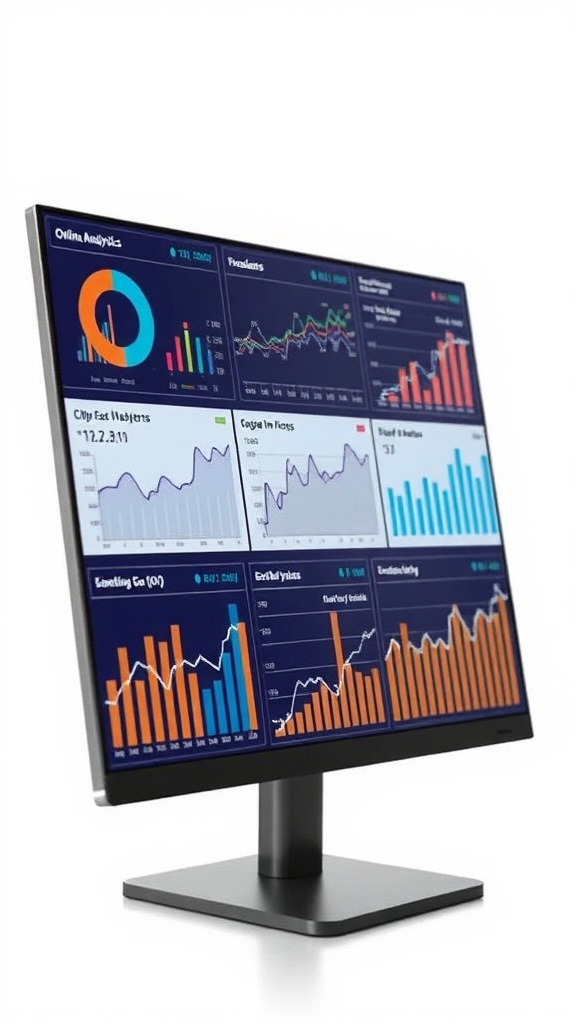
Online analytics is shifting from browser-centric, third-party cookie tracking toward a privacy-first, data-quality approach. Marketers and analysts who adapt to first-party data, robust measurement plans, and clean data architectures will get more reliable insights and protect customer trust.
The measurement challenge
Browser restrictions, ad-blocking, and stricter privacy laws make traditional tracking less reliable. That changes how you interpret traffic, conversions, and attribution.
Sampling, missing sessions, and fragmented user identities can create blind spots that lead to bad decisions unless you proactively address them.
Focus on first-party data and consent
First-party data—behavior captured directly on your properties—becomes the core of reliable analytics. Collect only the data you need, obtain clear consent, and map consent states into your analytics to ensure compliance. A consent management platform that integrates with your analytics and CRM helps you honor user preferences while preserving measurement quality.
Server-side tracking and clean data pipelines
Client-side tags are easy but fragile. Server-side tracking moves critical events to a controlled environment, reducing data loss from ad-blockers and improving security. Pair server-side capture with a clear event taxonomy and a centralized pipeline (data warehouse or analytics lake) to make data accessible for analysis, BI, and modeling. Ensure data schema stability and document transformations to avoid versioning mistakes that break dashboards.
Event-driven measurement and the measurement plan
Switch from pageview-dominant reporting to event-driven measurement.
Define key events (product views, add-to-cart, sign-ups, purchases), include consistent properties (product ID, currency, user status), and set clear naming conventions. A simple measurement plan — mapping business goals to KPIs and events — prevents inconsistent event naming and ensures every metric has a business owner.
Attribution and experimentation
With fragmented signals, simple last-click attribution becomes more misleading. Use multi-touch models and incrementality testing to measure the real impact of channels.
Run A/B tests and holdout experiments to validate marketing lift, and connect experiment results to customer lifetime value where possible. Prioritize experiments that reduce uncertainty on high-impact decisions.
Data governance and quality checks
Analytical confidence depends on data quality. Implement automated quality checks for volume, schema, and anomalies.
Version control your tracking code and documentation, and create an incident workflow for when metrics change unexpectedly. Define access controls so analysts can query data without exposing raw PII.
Dashboards and storytelling
Clean data is only useful when communicated effectively. Build dashboards that answer specific questions for each stakeholder: acquisition for marketers, funnel health for product owners, and revenue metrics for finance. Use cohort and retention reports to show long-term impact, not just vanity metrics. Include interpretations and next steps directly in dashboards to reduce misreading.
Quick implementation checklist
– Audit current tracking and identify gaps (missing events, duplicate tags).
– Create or update a measurement plan tied to business goals.
– Implement first-party data capture and consent integration.
– Consider server-side collection for critical events.
– Set up automated data quality tests and alerting.
– Move from last-click to multi-touch attribution and run incrementality tests.
– Build stakeholder-specific dashboards with clear action recommendations.
Adapting to a privacy-first environment requires engineering, analytics, and marketing working together. When measurement is intentional, privacy-aware, and governed, analytics becomes a strategic asset that drives better product and marketing decisions while respecting customer expectations.
