
Modernize Analytics with Consent-First, First-Party Event Measurement: A 90-Day Plan

Online analytics is evolving from simple traffic counting into a strategic capability that drives product decisions, marketing performance, and customer experience.
As privacy expectations and browser constraints reshape data collection, businesses that adapt their analytics approach will preserve measurement accuracy and maintain trust with users.
Focus on first-party data and consented signals
With stricter privacy standards and limitations on third-party cookies, relying on first-party data is essential. Prioritize collecting consented signals directly from your website, apps, and logged-in users. Build clear consent experiences that explain value to users (better recommendations, personalized offers) so more visitors choose to opt in.
When consent is granted, capture rich event-level data that feeds personalization, attribution, and product analytics.
Adopt event-based measurement and a clear taxonomy
Shift from pageview-only tracking to an event-driven model that mirrors user intent: product views, add-to-cart, sign-ups, feature interactions, and error events. Define a measurement plan with a consistent taxonomy — naming conventions, event parameters, and user properties — to avoid fragmentation across tools.
A well-documented taxonomy reduces duplicate events, simplifies reporting, and speeds up analysis.
Use server-side tracking and data enrichment strategically
Server-side collection can increase data reliability, reduce ad-blocker loss, and help manage user consent centrally. When implemented alongside client-side consent checks, it protects user privacy while providing more complete signals.
Enrich first-party analytics with CRM or transactional systems to close the loop on revenue, lifetime value, and retention.
Always honor consent and avoid enriching data where users haven’t agreed.
Embrace aggregated and modeled approaches
Where direct measurement is limited, aggregated and modeled data can fill gaps. Conversion modeling uses available signals to infer performance while maintaining privacy constraints. Cohort-level analytics, probabilistic attribution, and privacy-preserving aggregation help teams answer core questions about channel effectiveness without reconstructing individual user journeys.
Prioritize governance and data quality
Reliable decisions require reliable data. Set up governance: owning measurement standards, version control for tagging changes, regular audits, and automated validation checks.
Track instrumentation drift (when events change or stop firing) and assign ownership for each metric. Document definitions for key metrics — conversion, active user, retention — so stakeholders interpret reports consistently.
Make analytics actionable and integrated
Analytics should connect directly with workflows. Embed dashboards in product and marketing tools, automate alerts for anomalies, and integrate experimentation platforms so learnings convert into changes. Focus reports on decisions: what to stop, what to test next, where to invest.
Avoid vanity metrics by aligning reports with business outcomes like activation, retention, and revenue per user.
Invest in skills and collaboration
Blend analytics skills across teams: data engineers to manage pipelines, analysts to translate signals into insights, and product or marketing owners to act on recommendations. Foster regular review cadences where analysts present hypotheses, tests, and next steps. Encourage lightweight, fast experiments informed by analytics rather than relying solely on intuition.
Start with a 90-day modernization plan
If your analytics feels outdated, begin with a focused plan: audit existing tags and data quality, define a measurement taxonomy, implement consent-first event tracking, and set up a few core dashboards tied to business outcomes. Iterate quickly, validate changes, and scale instrumentation as the organization matures.
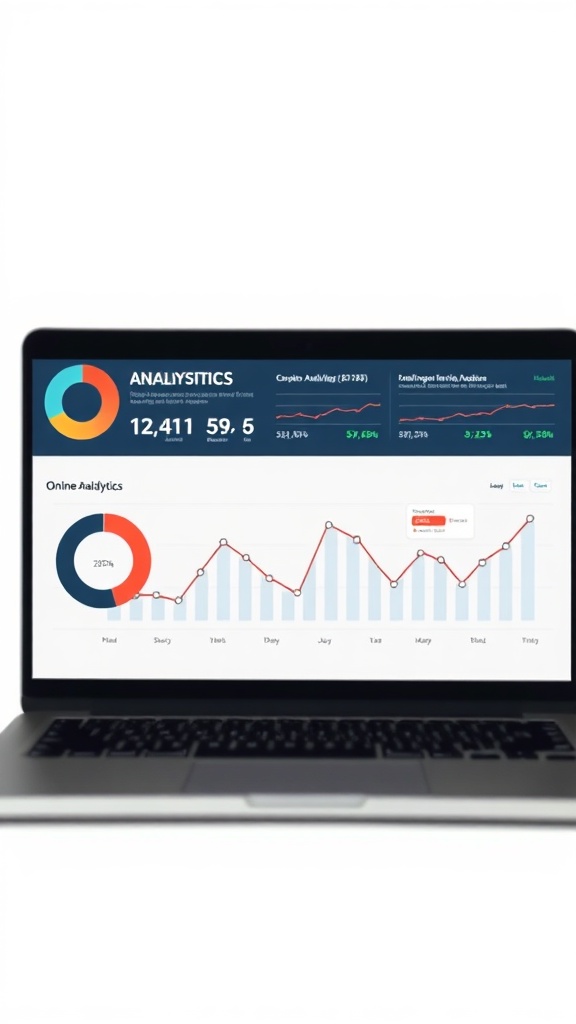
Modern online analytics balances measurement accuracy, user privacy, and business impact. By centering on first-party signals, clear taxonomy, governance, and integration with decision processes, teams can maintain robust insights that drive growth while respecting user expectations.
