
Analytics as a Product: Privacy-First Measurement, Data Governance, and Activation for Growth

Online analytics has shifted from simple pageview counting to a strategic discipline that drives growth, personalization, and privacy compliance. As user expectations and regulatory frameworks evolve, businesses must balance accurate measurement with ethical data practices. The organizations that win are those that treat analytics as a product: clear ownership, reliable pipelines, and direct alignment with business outcomes.
Privacy-first measurement
Cookies and cross-site tracking restrictions have pushed analytics toward privacy-first approaches. Rely on first-party data capture and consent-aware measurement to maintain visibility while respecting user choices. Implement consent management platforms that integrate with tag managers and analytics tools so tracking activates only when users opt in. Use server-side collection where appropriate to reduce client-side loss and improve data reliability, making sure to hash or pseudonymize any personal identifiers before storage.
Data quality and governance
Accurate decisions require clean data. Start by documenting your measurement plan: define events, parameters, and naming conventions that map directly to KPIs. Automate validation checks to catch missing events, duplicate hits, or schema drift. Establish a data governance framework with roles for ownership, access control, and retention policies. Centralize raw and processed data in a unified store to make analysis efficient and auditable.
Advanced analytics and activation
Event-based analytics and modern data stacks enable richer capabilities like funnel analysis, cohort retention, and predictive scoring. Use machine learning models to forecast churn or lifetime value, but validate models regularly to avoid drift.
Link behavioral signals to activation channels: create user segments from analytics data and feed them to advertising, email, and product experimentation platforms for personalization and re-engagement.
Cross-device identity and measurement modeling
Cross-device tracking remains challenging when users traverse mobile apps, web, and connected devices. Adopt deterministic identity methods where possible—logged-in identifiers and secure hashed emails—to stitch sessions.
For cases with limited identifiers, rely on probabilistic methods and modeling to estimate conversions and user journeys. Be transparent about assumptions and quantify uncertainty when reporting modeled metrics.
Experimentation and optimization
Analytics should power continuous optimization. Pair analytics with A/B testing frameworks to measure causal impact rather than correlation.
Track not only conversion lifts but secondary metrics such as engagement quality and retention to avoid short-term wins that harm long-term value.
Practical steps to improve your analytics program
– Audit current tagging and event coverage against a documented measurement plan.
– Prioritize first-party data collection and consent integration.
– Implement server-side or hybrid tracking where needed for reliability.
– Create automated data quality alerts and monitor for anomalies.
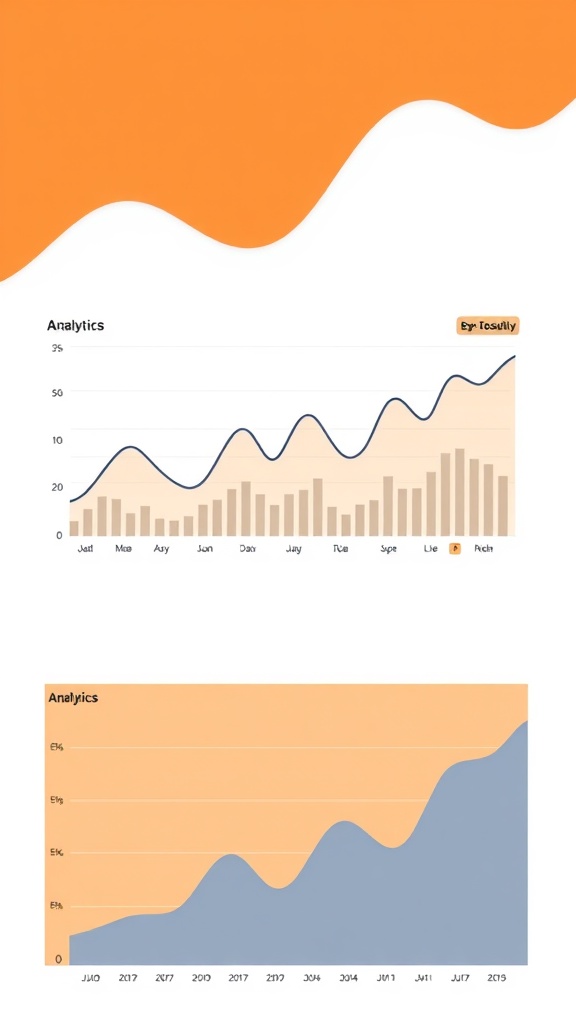
– Build accessible dashboards that map directly to business KPIs.
– Connect analytics segments to activation tools for personalization.
– Regularly review and retrain predictive models; track model performance.
Final thoughts
Online analytics is a continuous program, not a one-time project. Focusing on privacy-aware measurement, robust governance, and actionable insights turns data into strategic advantage. With a disciplined approach—clear measurement, reliable pipelines, and activation pathways—analytics becomes the backbone of smarter marketing, better product decisions, and measurable growth.
