

Online analytics shapes how businesses understand audiences, test ideas, and improve digital experiences. With privacy expectations rising and measurement models evolving, a clear analytics strategy is essential for turning raw data into reliable decisions.
Start with clear objectives
Analytics without business context produces noise. Define a short list of outcomes—revenue per visitor, qualified lead volume, trial-to-paid conversion, or content engagement depth.
From each outcome, derive measurable KPIs and the specific events that indicate progress.
Prioritize event-based measurement
Modern analytics favors event-based tracking over pageview-only models. Track user actions that matter: button clicks, form submits, signups, content interactions, and checkout steps. Use a consistent naming convention for events and parameters so analysts can query data quickly and avoid fragmentation.
Essential metrics to monitor
– Acquisition: channels, campaigns, cost per acquisition (if cost data is available)
– Engagement: session duration, pages per session, scroll depth, video engagement
– Conversion: conversion rate, average order value, funnel drop-off points
– Retention and lifetime value: cohorts, repeat purchase rate, churn indicators
– Technical: page speed, device and browser breakdowns, error rates
Segment to uncover patterns
Segmenting by traffic source, campaign, user cohort, device, and geography reveals which audiences perform best. Combine behavioral segments with demographic or CRM-based attributes to tailor messaging and product experiences.
Ensure data quality and governance
Accurate insights start with clean data. Audit your tracking regularly: confirm event payloads, remove duplicate tags, and validate UTM parameters at campaign creation.
Implement strict naming rules and maintain a measurement plan that documents event definitions, goals, and owners. Use staging environments to test changes before they go live.
Adopt privacy-first practices
Respecting user privacy and complying with consent requirements improves trust and long-term measurement stability. Focus on first-party data collection, minimize reliance on third-party cookies, and implement robust consent management. Where data is incomplete due to consent limitations, use aggregated modeling and probabilistic methods to fill gaps without compromising privacy.
Leverage server-side tagging and identity resolution
Server-side tagging reduces client-side noise, improves load performance, and enhances data control. Pair it with first-party identity solutions—hashed emails or persistent IDs that users opt into—to stitch cross-device behavior and enrich analytics without exposing raw personal data.
Integrate analytics into decision workflows
Data is only valuable when it informs action.
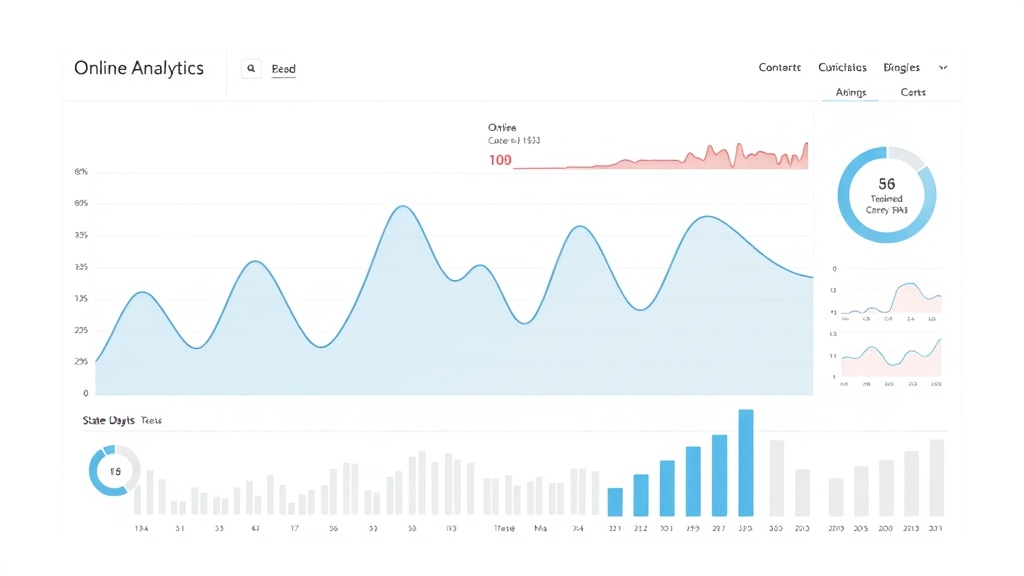
Build dashboards that highlight the key KPIs and funnel bottlenecks for each team. Automate alerts for major deviations and schedule regular reviews that focus on hypotheses and experiments rather than vanity metrics.
Drive continuous optimization
Use analytics to generate hypotheses for conversion rate optimization and A/B testing. Track variant performance with reliable events and segment by audience to identify where changes matter most. Combine qualitative feedback—session recordings, surveys—with quantitative signals to prioritize fixes that move the needle.
Choose the right toolset
There’s no one-size-fits-all stack. Popular analytics platforms capture behavior, while tag managers, data warehouses, and BI tools enable deeper analysis and activation. Select solutions that align with your scale, privacy requirements, and integration needs.
Online analytics is a continuous practice: refine your measurement plan, validate your data, and keep experiments small and frequent. With clear objectives, disciplined tracking, and privacy-first collection, analytics becomes a strategic engine for growth and better customer experiences.
